Monday, March 24, 2014

What Indie really means…


Indie does not mean ‘low quality’. It essentially means that as an author or publisher that you have decided to pay for the publishing process yourself. You are willing to pay for editing, copyediting, illustration/cover design, copyright, marketing, book formatting/typesetting, ebook charges, and print costs. People that decide to go indie do so with the full knowledge that this is an expensive endeavor that requires careful money management, realistic goals, discipline, and time. The idea that someone will spend years producing poorly conceptualized books is a false notion. Most of the independent publishers and authors have worked in this industry for a number of years as booksellers, reviewers, editors, and more recently authors. Yes, there are authors that have decided after fifteen years to begin to develop their work independently of large publishing houses. The stress, politics, and small payments written about on blogs all over the web have contributed to this development. Those looking to get published should know that most independent companies have calls for authors year round and have great success with getting their authors awards, speaking engagements, and making amazon best seller lists. I highly recommend that budding authors and publishers continue to do their research. Please learn about the industry from informed insiders that have years of experience with publishing. If you are deciding to go indie, this advice could save you thousands of dollars in the long run.


Good luck on your journey and Happy Reading.

Sunday, March 16, 2014

There is no such thing as an 'honest review'


I just finished finalizing a new book release. It took me six months to ensure that it was quality work. I know that it is review time. Currently, I am looking for reviewers. Don’t get me wrong. I know plenty of reviewers that can read my work and give reviews. However, I am that rare form of author that is brave enough to ask different people for reviews. Therefore, I search for new reviewers with each book release. This past week I stumbled across three review groups on Facebook. They were hilarious to say the least. In the description it stated that no one should ask to trade reviews or pay for positive reviews. Additionally, there was more comedy as the description stated that this was a place where ‘honest reviews’ take place (Insert laughter here).

Since everyone seems to have opinions on how authors get reviews…I think I will take a stab at it as well…

I don’t believe for one minute that most authors get ‘honest reviews” and this is why…

First, the only people that should be reviewing people’s books in my opinion are readers. This means people that actually purchase your work. If you are sending free .pdf files of your work to random people, how can you look someone in the face and state that you want honest reviews? You are gifting your work to someone and then begging for a review. There is nothing honest about this practice since in fact you are paying them with a free book.

Second, there are thousands of authors on amazon.com that make their work free for thirty days in order to garner reviews and even get best-seller status. Not only is this indeed unethical. It is once again a scam to garner reviews from people that did not pay for your work by ‘gifting’ them a free book. Further, this practice makes it look as if an author has a higher ranking on amazon.com than they actually do. Sorry authors but the scam is up.

Third, never tell someone not to pay to get a book review. That is ridiculous. There are many large review companies under the publishing industry umbrella that in fact do get paid to produce high quality and reputable reviews. What about book critics? What about literary columnists? There are also independent reviewers and those that run literary blog tours that in fact get paid to review authors work.

Finally, most authors send their work to the same review houses over and over again to ensure they are getting reviewed. Positive reviews are often based on the relationship between the author and the review house. I have seen it time and time again in this industry. Do you really think that publishing companies don’t have relationships with review companies? No one can really believe that this true.

Please stop with the ‘honest review’ nonsense. Focus on getting a more thorough review of your work that includes a review of the syntax, storyline, story elements, content, and overall writing style. This is more telling to the reader in terms of the type of experience they will have when they engage with your work. Steer clear of the ‘honest review’ mantra since this clearly hinges on something personal rather than professional. Reviews are hard enough to come by and since most readers report that this does not influence their decision to purchase there is no need to convolute this practice with foolishness.

As always happy reading!


Tuesday, March 11, 2014

R-E-A-D


The most essential component of any writers experience is reading. This is the way that authors learn to write, conceptualize ideas, and form those ideas on paper. Most best- selling authors are avid readers. They have their favorite authors and name them quite often. They attend writer’s retreats, participate in writing groups, and exchange books with one another. At the core of great writing, is the pleasure or indulgence of reading a great works. There are some writers that go to school to learn to write and/or to learn to teach writing. Others are self-taught through library programs, writing workshops, and self-help books. The majority of the writers that are self-taught can name at least fifty books that they have read several times. Although they are writers they haven’t quite reached the level of their favorite writers and work a lifetime to achieve a fraction of this greatness.

Ralph Waldo Emerson once said, “There is creating reading as well as creating writing.”

Many authors hold that truth to self-evident regardless of the genres they read and write. I encourage those that want to be really great writers to read, often.

As always, here are some reading recommendations until next time:

Classic Read:
Of Mice and Men by John Steinbeck

African American Fiction:
Their Eyes Were Watching God by Zora Neale Hurston

Contemporary African American Fiction:
Deadly Sexy by Beverly Jenkins

Children’s Book:
The True Story of the Three Little Pigs by Jon Scieszka

Young Adult Novel:
I hadn’t meant to tell you this by Jacqueline Woodson

Happy reading!  

Friday, February 21, 2014

The Truth about Publishing and Social Media


I never realized how many charlatans existed in the publishing industry until I made my way to social media. There is no nice way to say this, but we just have too many liars in the industry. In the last year, I took a break from book touring. It was hard for me to do since this was the way that I generated the majority of publicity for my business. I turned down event after event, and instead made plans to come back with a stronger book tour. In the meantime, I noticed some things. First, I noticed the large number of groups on social media that put on the façade about being ‘helpful’ for authors. I also noticed the large numbers of authors that are literally just starting out in the industry that think everything should be ‘free’. I have never seen such foolishness in all my life. No one is really offering any mentoring to these folks. In fact, no one is telling these authors the truth. Therefore, I am going to be brutally honest in a way that is going to hurt some feelings, but will enlighten others to the publishing industry.

First, there is no such thing as an industry expert. There are best-selling authors that learn something new about the publishing industry each day. Anyone that convinces you that you do not need to market your book has sold you a serious bill of goods. The question you need to ask yourself is why you are buying it…

For years, authors talked about how eBooks and the large booksellers changed the market of books for the industry. However, no one listened until the large chain bookstores began closing. Then the 25 year old indie bookstores closed. This devastated smaller publishing houses that made the majority of their sales this way. This also made many publishing houses close their doors. I have seen so many authors complain about going to court or getting sent to collections over book returns and advances they never made good on as professionals. Why are people still looking for advances again? You never borrow against the house. It is like gambling. I have seen book events that are only marketed to authors, and participated in a few where people were clearly about just making money off authors. I have seen people come up with catalogs and steal money from new authors. I have seen it all in this industry. The worse yet are these social media groups run by these beginning authors that think they know things that they have no idea about. BEWARE!  
 
Second, all authors know that they cannot solely do social media marketing. At some point, you must get your work in the hands of readers through traditional media marketing, print media marketing, radio, television, magazine, and the best media (word of mouth). Social media is fabulous but the last thing you want to get is tunnel vision. You have reviews on all your books and now what? You are featured on blogs and now what? You have done blog talk radio and now what? At some point, all of these things need to generate sales for your book. Otherwise, it is just a hobby.
 
I have seen time and time again. Authors that spend their time riding the coat tails of other authors only to find themselves not getting the publicity or sales they need for their work. For example, you may want to make sure that the authors that are claiming a high social media following actually have a readership. Some are buying their Facebook and Twitter likes for $39. How else can authors that are literally nobodies all of sudden end up with Twitter followings of $40,000 in less than thirty days?

Third, if you are new to the industry you should never allow someone to tell you not to do book tours. Any author in the industry five years or more will tell you this is terrible information. If you are new, how in the world do you get your work out to others? Social media works for people that have been in the industry for a long time. It does not work for those that are new that do not have a following. Authors publish books every day. There are literally hundreds of new books being published every day. In order to stand out, you need to think differently. There are so many authors that have newsletters, how-to guides, blogs, editing businesses, reviewing businesses, and literary blog tour websites. Every author gives back to the industry in some way. They are not being given anything for free. The work they do is at the expense of themselves and they either do the work for free or charge a nominal fee. Publishing is an industry not a business. There are at least twenty types of businesses under the publishing industry umbrella. As an author, you will come into contact with many of these businesses such as typesetters, editors/proofreaders, review houses, large publishers, small publishers, graphic designers, book critics, literary magazines, illustrators, professional publishing organizations, libraries, book conventions, book sellers, eBook sellers, media outlets, literary events, book clubs, etc. All of these are businesses. Someone is paying and someone is making money. If I ever do a workshop for authors in the business, it will be entitled, “The Myth of the ‘Free Offers’ in the publishing industry. Everything costs and that is a lesson to be remembered during your time in this industry.  

Fourth, author help groups are great if you are getting information that is accurate. However, they are not good if they are being run by jerks that think they know everything about the industry. It is not helpful for someone to lie to you about the industry. For example, it is helpful for someone to know what it means to be a best-seller, ghost writer, and know the various types of markets in the industry. The industry has changed. There are vanity press markets, academic press markets, small presses, self-published authors, and traditional publishers. Authors need to spend time learning the industry and less time gossiping in these social media groups. It is sad to say the least. Please avoid any authors that put in the description of their groups that they are ‘real authors’. That is ridiculous, sad, and pompous. This just means they are disgruntled, angry, and probably are dealing with a bill from their publisher for not marketing their work. Don’t bank your career on a liar. I would never be in any social media group where people are seeking ‘free advice’ from an established author. I have been in this industry for eight years. I would never join a group that doesn’t trade reviews; post events, feature authors on blogs, and post new advances in the industry. The rest of those groups are a waste of time. BEWARE!

Fifth, getting your work out with a publicist has been tried by many authors. Any publicist that works with you will tell you that it is much easier to work with an established author than a new one. They are not miracle workers. You must already have some basics set up such a blogs, websites, past interviews, reviews, etc. Otherwise, what are they publicizing?

Sixth, I detest book shamers. I wrote another blog about this in the past. I really think there is some jealousy and pettiness at the root of book shaming. Every author that writes a book is not a ‘great writer’. Unless you are Toni Morrison, J.D. Salinger, and authors of this caliber…you have nothing to say. As someone that studies literacy, it is a joke to watch authors do this and I don’t participate in this myself. It makes the authors in the industry unprofessional and takes away from the credibility of authors when they begin behaving like rappers that start a beef every time they drop a new album. If the only reason someone should read your work, is to distinguish your work from someone else’s…then you should give up writing now. That is ridiculous. Avid readers read…EVERYTHING! Perhaps the average author doesn’t know this, but it has been proven in the research literature. I urge you to learn the industry and stop the pettiness. It looks ridiculous.

Finally, be realistic about what it means to be an author in the industry and ask questions. You will spend at least $1,000-$5,000 plus dollars of your own money to market your work each year. This comes from doing a small book tours, book parties, social media campaigns, mailing books to get reviewed. Yes, you will have to pay for books to get reviewed if you exceed the limit your publishing company set for you. You will have to pay for vending fees, airfare, accommodations, marketing materials, and most of all your time. It takes time to get your work out and believe me it is time consuming.

Past this blog onto every new author you know in the industry. It is time for people to stop telling you to do your research and be really honest about what it means to be an author in an ever changing industry.


Monday, February 3, 2014

Book shaming is a joke…Right?

I have noticed a trend in the past few years among authors. It is the pastime of shaming readers, authors, and publishers for the types of books they enjoy. It permeates almost every genre. This is particularly true among the vanity press market. The last time I checked authors that write romance, erotica, romance, sci-fiction, fantasy, paranormal, horror, new adult, young adult, and the many other sub-categories all write under the larger umbrella of fiction. This means that the majority of what they write is not true. It is fantasy pure and simple. Some of it is well written and others books are well…not…so…much. However, the main issue at hand is that it is all make believe. It is not true. There is no need to distinguish between what is considered to be ‘intelligent’ fiction vs. ‘gutter’ fiction, because it is all….fiction. Most people view this genre as unintelligent anyway unless your book has been deemed worthy of being the great American novel. As fiction writers on the vanity market, your work is not being read in college classrooms, debated at conferences, and being recommended by the greatest thinkers of our time.

No, your work is being read while someone goes to the bathroom. Yup, I said it. Every day people read your work at every waking moment. It is probably frequently read while someone is on the toilet or bathing. Thank goodness for those folks. Otherwise, many of the lesser known authors with less than ten published titles would be known by well…no one. There would be no one to purchase, download, and blog about your books. This is why there is no need to book shame. I am sure that there is room in the bathroom library for your title as well.    

The funny thing about the publishing industry is always the authors. The culture could leave your head spinning. The shaming inside the industry is far worse than the almost nonexistent shaming by those that sit outside the industry. It becomes a game for authors that are losing sales to new authors. It is perfectly common for a nonfiction author to comment on a fiction author (even though they haven’t even read the person’s work). It is common for a romance author to comment on an erotic author’s work. It is common for a most authors that don’t even read the body of work in a genre to comment on another authors work.

The biggest joke includes the authors that are classified under the urban fiction market. In the past few years, there are authors taking to blogs, doing blog interviews, and even spending time influencing major review companies to trash other authors. It is possible the saddest thing anyone can witness. The worst thing is that every author, blogger, and publisher spending time trashing another person’s work has really missed the mark. In the end, it is about a greater picture of literacy not your individual book sales. Otherwise, you become no different than the authors that write books to further their brand via a ghost author or the self-proclaimed hustler/writers that ‘write to eat’. The fact of the matter is that an author can have a well written book, edited, and proofread. It doesn’t mean that the book is a decent read. The content of the book could be awful and not engaging to the reader. It happens all the time. Any book critic will tell you this is the case. There is a huge difference between a book critic and a book reviewer. Please learn the difference. I would never tell someone not to get caught up in syntax. However, I am one of the people in the industry that is concerned about where these conversations are going.

When did authors begin behaving like rappers? Why are well established authors starting beefs with new authors that are outselling them in the publishing market? In the end, it is about the book and reader, right? It is about the experience the reader walks away with after finishing a book. It really is best to let the reader decide what they want to read.     

Mistakes

It is as if people derive some pleasure from book shaming authors, readers, and publishers for doing what they love. It is a practice that doesn’t make any sense. The excuses are just a flimsy as a chiffon dress in the rain and border hypocrisy. For example, I read several postings via discussion boards on Facebook about authors that need editors. It was written by an author that I have on my shelf currently. I could literally take a red pen to this authors work and find at least fifty four mistakes in the first two chapters. This means that before you throw stones at another writers work that you should make sure that you are not living in a cheap, glass house.

Book covers

I have seen it all and it is sickening. Authors whether self-published or not are talking about the book covers of books. Really? Perhaps you should make sure that your own book cover actually matches the content you have inside the book. I have seen some of the worst book covers on authors books that complain about this issue. My problem with this complaint is that it goes against everything that readers learned in school. How many times did your teacher tell you, “Don’t ever judge a book by its cover”? Shame on you for shaming authors that were probably not in control of this process anyway…Although, this is humorous it doesn’t advance the field. Why? Those same authors/bloggers are not including books with really great covers. Therefore, the conversations go nowhere and we learn nothing…except that people are mean. I learned this in Kindergarten. Therefore, as a director would say, “Next!”

Self-proclaimed experts

The publishing industry is full of reviewers, authors, bloggers, book critics, publishers, and so on that worked for years in this industry. They have a formula for quality that includes many factors. Every genre is different in terms of who gets deemed as offering something quality to the industry. Indie authors, academic publishers, children’s publishers, and the vanity press market all have their different sets of rules. I love how the internet has created the self-proclaimed experts that have been in the industry less than a minute deciding who will make it in the industry. Isn’t that funny? I always thought it was the readers, marketing professionals, reviewers, and publishers that made those decisions. Why are these folks shaming others again?

I will end this blog with offering some sage advice for authors that have been in this industry for less than five years. As someone that has been in this industry for seven years, I urge authors at all levels to begin behaving like professionals. I started out doing research for three years on the publishing industry prior to initiating the publishing process. During that time, I researched the top twenty five publishing companies for my genre(s). My decision for my writing career has to do with me being knowledgeable about the industry and it dates back fifteen years. I knew that I would eventually want to publish other authors. Therefore, I am both traditionally and self-published. I found out that most people in the industry typically do both. You will find it difficult to find an author in the industry that doesn’t write under at least two pen names. I spent seven years writing prior to doing my three years of research. I wanted to ensure that had a certain number of titles. During my research, I read about authors being under pressure to produce work in a short amount of time. I had my work professionally edited and protected. I am now on my thirteenth book in seven years. I currently have eleven manuscripts on my desk of work that are ready to go. I also have three authors that I will publish in the next two years. It is so important to learn about this industry. I have been in it for a while now and I learn something different every day. I have great people in my network and a good circle of freelance professionals that can do everything. Do you know how to read your book contracts? Do you have a publicist? What is your marketing plan? How do you connect with your readers? Can you readily identify fans of your work? Are your readers waiting for your next book release? If you answered no to any of the previous questions, it is important that you spend time working on these things. I encourage authors to spend time learning the industry and less time shaming authors, readers, and publishers. It doesn’t make you a great author to do this type of thing. You look pathetic and thirsty at best. Please concentrate on creating really good books for readers. In the end, we should all be celebrating readers enjoying books period. This is why book shaming is a joke…right?

 
Recommended guides for new authors:
Sage Advice for the Indie Children’s Author by Tiffany A. Flowers

http://www.amazon.com/Sage-Advice-Indie-Childrens-Author-ebook/dp/B007O39XMW
 

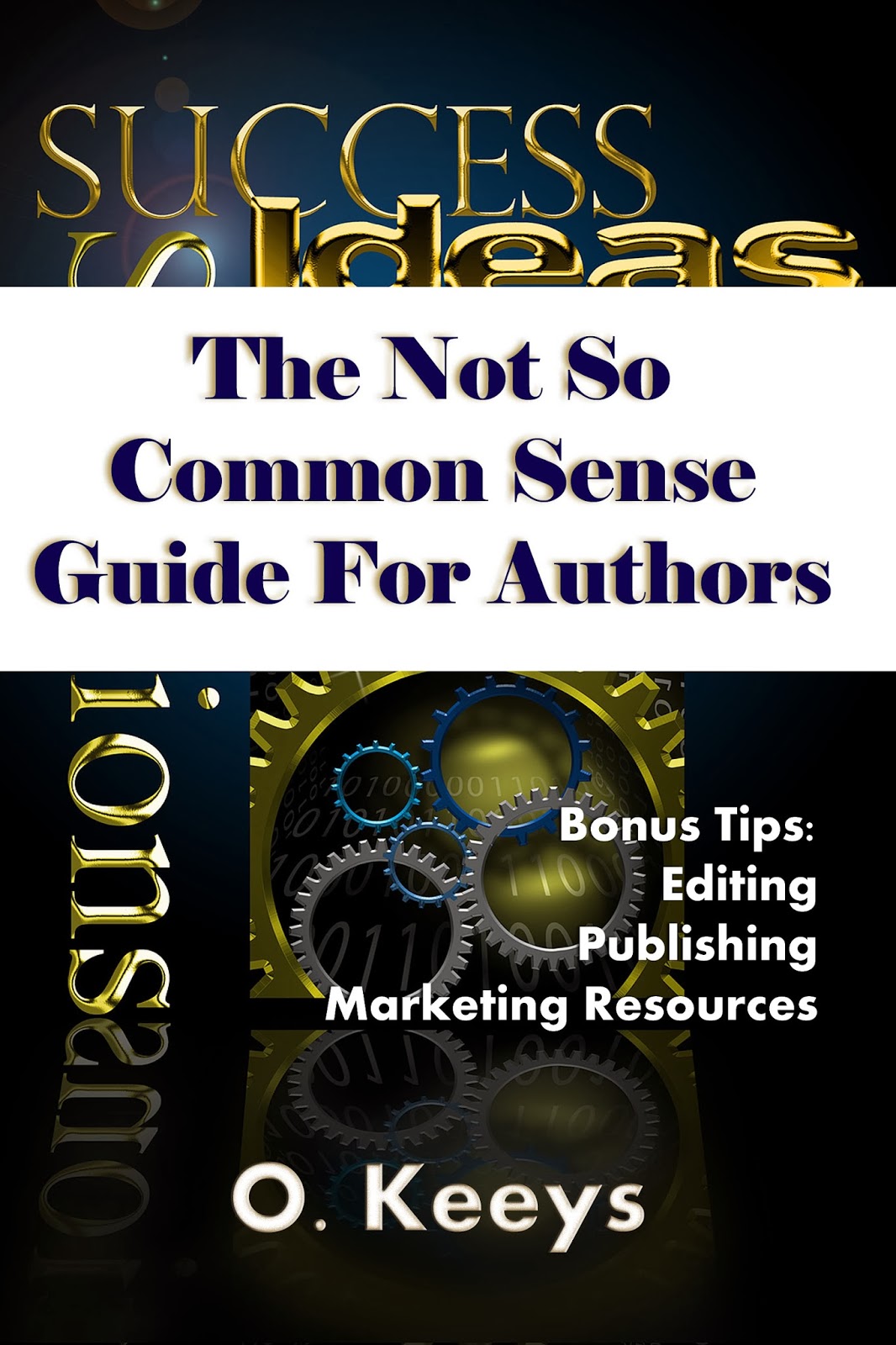
The Not So Common Sense Guide for Authors by O. Keeys
 
http://www.amazon.com/Not-Common-Sense-Guide-Authors-ebook/dp/B007TLLOB2/ref=sr_1_1?s=digital-text&ie=UTF8&qid=1391452950&sr=1-1&keywords=o.+keeys


Thursday, January 23, 2014

Rashaun J. Allen Literary Blog Tour - Day 4


Meet Author & Publisher Rashaun J. Allen
After Rashaun graduated from SUNY Albany with his BS in Business Administration and The College Of Saint with his MBA. He decided to combine his educational background with his passion for writing. 5 years into his vision, Rashaun has two books of powerful poetry: A Walk Through Brooklyn and In The Moment and is also the founder of Royal Blue Publishing.
Rashuan has published paperback and electronic books, edited manuscripts for authors, and theses for graduate students.  He has facilitated workshops for poetry and entrepreneurship for schools, libraries and organizations. He has been quoted in publication throughout the capital region of New York: The Chronicle, The Troy Record, Albany Student Press & UA Magazine. His goals are to write novels, publish future writers, and inspire youth through his story.
 Rashaun J. Allen Interview:
 
Tell Us about Yourself?
·         I have a great sense a humor. But when I try to make a joke few people laugh. I tend to let my eyes decide when I’m full. The gym’s my best friend but we haven’t spoken in a while and if I wrote as much as I talk I would produce twice as much material.
 
What are your favorite books?
·         The Glass Castle By Jeanette Walls
·         A Tree Grows in Brooklyn By Betty Smith
·         Things Fall Apart By Chinua Achebe
·         A Hope in The Unseen By Ron Sunskind
·         The Kite Runner Khaleed Hosseini
 
Do you have any advice for aspiring writers/authors?
·         Write something you’d like to read.
·         Find out where the writers are and go there!
·         Share what you wrote with somebody.
·         Tell that writer what you thought about their work.
·         Have fun
 
What has been the best and worst experience you’ve had on your literary journey?
·         Unreasonable expectations – I thought since my first book signing had 30 people every time I did one the turn out would be awesome. Then, I had a book signing where 2-5 people showed up. It opened my eyes to set modest expectations.
 
I understand you support different charities through the sales of your book.  Tell me about those.
·         I partner with local charities for events. I worked with the community counseling & mediation not for profit with their SIMBA program or “Safe In My Brothers Arms” which focuses on helping homeless male students complete high school. I did a couple poetry workshops along with the sales of my books.
 
Have you always wanted to be a writer?
·         Yes, but for a long time I didn’t think writing could be a career.  I read often but I didn’t know any authors.
 
How did you get started writing? 
·         Growing up I kept a journal. It was my feelings as rhymes, stories and sayings.
 
Do you remember the very first story you ever wrote?  What age were you when you wrote it? 
·         No, but I remember writing a play, I never finished when I was a teen.
 
If you could pass on one tidbit of knowledge to both your fans and aspiring writers, what would it be?
·         If you write solely for money you’’ll be pissed at your bank account.
 
What are three things readers don’t know about you?
·         I’m a huge fan of Game Of Thrones the TV series.
·         I love role playing games
·         Enjoy spending time with friends and family
 
Conversely, what are your best and worst experiences as a writer?
·         Discovering that I received more support as a writer from strangers than people I knew
·         I did a book signing at a bookstore where the owner attempted not to pay me for selling my books.


Friday, January 10, 2014

How do I price an Ebook?

Two years ago, I wrote an eBook for Indie Children’s Authors. Since that time I received many questions pertaining to eBooks from authors. The number one question that I get asked by authors has to do with pricing eBooks. I have asked authors to do their research. However, they always follow up with horrific and confusing stories about eBook pricing. My response to the authors is the same. A decade ago, we didn’t have eBooks. People would purchase books at $5.99-$24.99 for the paperback and hardback books. The books were priced according to what people would pay for the printing cost, editing/proofreading cost, cover design/illustration, marketing expenses, publisher/distribution commission, and finally the author royalties. All of this was considered into the costs for each book whether an author decided to go Indie or not. All of these costs are still a consideration for authors except for printing costs. Therefore, authors should price their work at 50%-60% off the cover price of their books. It is not wise to price all eBooks at .99 cents. Additionally, it is not good business sense to price box sets for books beginning at $2.99. Even if you sell four hundred copies of that book as an author you will only make $418 after the outlets get their cut of the book. This will not even pay for the editing costs, cover design, and marketing costs for the book that was produced. It is also the equivalent of giving your work away for free. Readers then get the wrong impression from authors thinking the profession is one in which people work for free. There are labor laws that protect the average worker. However, none exist for authors. Therefore, authors must protect themselves from poor business practices. If authors take the previously mentioned discount off books, readers will still be able to purchase three to four eBooks for the cost of one print book.   

Pricing for Young Adult/Tween EBooks

.99 Short Stories

1.99 Novellas under 50 pages

2.99 Novellas under 100 pages

3.99 Novels over 150 pages

4.99 Novels over 200 pages

5.99 Novels over 300 pages

6.99-8.99 novel over 400 pages

9.99-14.99 book box sets

 
Pricing for Children’s EBooks

.99 Tales, Poems, and books with one illustration

1.99 Short Stories with one illustration

2.99 Children’s Book Readers

3.99 Series books

4.99 Series books with illustrations

5.99 Children’s books with full illustrations

6.99 Full novels for children

 
Pricing for Nonfiction EBooks

.99-2.99 Short how to Guides

3.99 Nonfiction works over 100 pages

4.99 Nonfiction works over 150-200 pages

5.99 Nonfiction works over 200-300 pages

6.99 Nonfiction works over 350 pages

Underpricing eBooks by making them free or well below what they should cost will be the death of the publishing industry and the beginning of authors being asked to work for free. Please feel free to comment on this blog as an author or reader and consider whether authors will be able to consistently produce high quality work for readers in the future when books are priced either free or .99 cents.

 
Tiffany A. Flowers is a native of Chicago, Illinois. Tiffany is a blogger, author, and philanthropist. She is the author of various picture books, series book, and young adult books to date. She has been featured on radio shows such as the Reading Circle, The Living Hope, and The Funky Writers Show. In 2010, Poetic Monthly Magazine listed her second book release, For those who stare at the moon as one of the best reads of 2010. Currently, Tiffany is working on penning the installments in her books series for teens and children in the intermediate grades. You can find out more about her tour dates, book trailers, and book releases by logging on to www.goldenbutterflypublishing.com or by accessing her blog at http://authortiffanyaflowers.wordpress.com/.
 

Blogs About Publishing

Independent Publisher Links